.png)
 15 minutes ago
1
News india INDIA Bloc To Oppose Delimitation Bill, Kharge Says BJP Wants To 'Finish Democracy'
Last Updated:November 28, 2026, 22:41 IST
INDIA bloc parties have decided to oppose the Centre's delimitation Bill, with Mallikarjun Kharge alleging it threatens democracy and could undermine SC/ST representation.


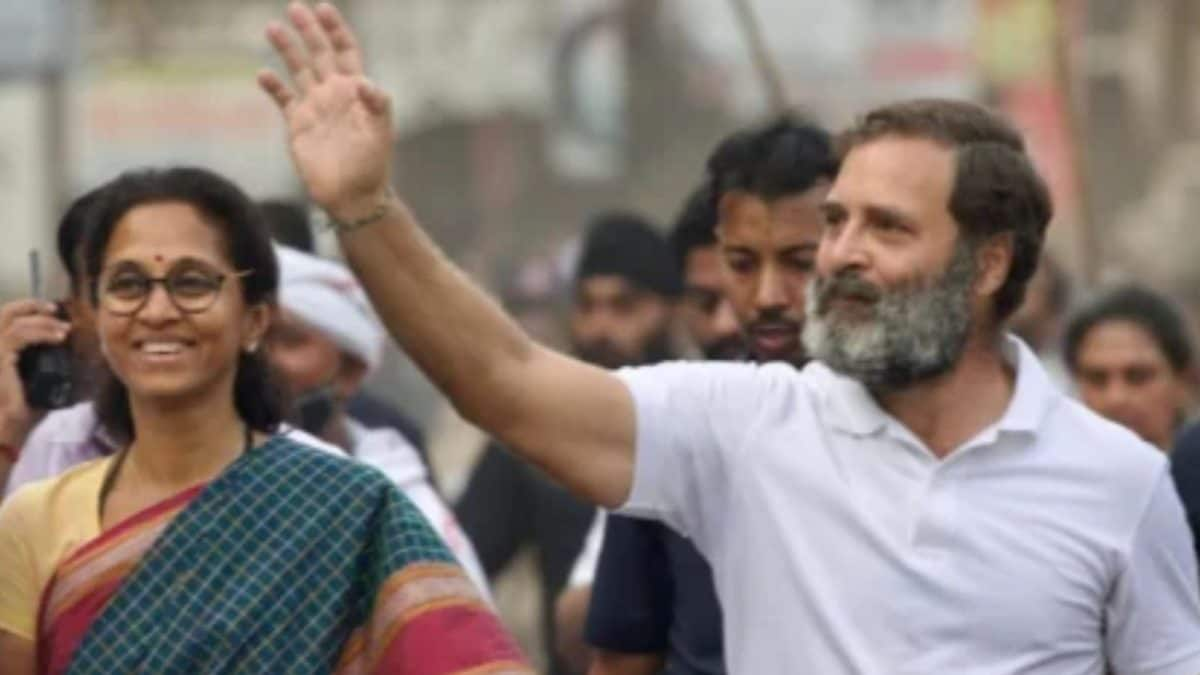
Rahul Gandhi and Mallikarjun Kharge.
Opposition parties have decided to jointly oppose the Centre’s proposed delimitation legislation in Parliament, with Congress president Mallikarjun Kharge accusing the BJP of using the exercise to secure a permanent hold on power. The INDIA bloc has also raised concerns over the impact of the proposed changes on the representation of Scheduled Castes (SCs) and Scheduled Tribes (STs).
At a meeting of opposition floor leaders in Delhi on Saturday, the parties agreed on three demands: retaining the existing strength of the Lok Sabha, implementing women’s reservation within the current number of seats, and maintaining the present allocation of parliamentary seats among states for the next 25 years.
Addressing reporters after the meeting, Kharge alleged that the proposed constitutional amendment was an attempt to weaken democracy and strengthen the BJP-RSS’s control over the country.
He compared the government’s move with the BJP’s ‘400 paar’ slogan during the 2024 general elections, claiming that the proposed expansion of Parliament was aimed at achieving an ‘800 paar’ majority.
“He also claimed that through this bill, they want to ‘finish democracy’ in the country," Kharge said.
“Once the power goes into their hands, they will do anything to use this bill as a weapon to remain in power permanently. We will oppose this bill," he told reporters.
Kharge further alleged that India could end up following a political system similar to China, where large numbers are used to secure overwhelming majorities.
“They want to end democracy and give the government in the hands of the BJP/RSS forever. Manusmriti will be implemented, this is certain," he claimed.
The Congress chief said the government had previously attempted to pass the legislation but failed because opposition parties had united against it.
“The Modi government’s Constitutional amendment bill is a big threat to democracy, as it threatens to end democracy and take control of power permanently," he alleged.
Calling the government’s move a ‘natak’, Kharge said opposition parties would stand together against the proposal because it did not protect the interests of SCs and STs. He also alleged that the ruling party was working to break opposition parties, including the Trinamool Congress (TMC) and Shiv Sena, to strengthen its position.
“The country will suffer badly due to this bill," he said, adding that increasing the Lok Sabha’s strength to 850 would have serious consequences for the country’s democratic system.
Kharge Questions Role Of Chief Election Commissioner
Kharge also raised concerns over the proposed delimitation process and the role of the Chief Election Commissioner. He described the poll panel chief as ‘tainted’ and referred to allegations of ‘vote chori’ linked to the Special Intensive Revision (SIR) of electoral rolls.
“There will be more ‘golmaal’ under him, as he is already under question…He can do anything – Make a general seat as SC/ST or reserve a seat from another area as general only to suit the BJP," Kharge said.
The opposition has argued that the proposed exercise could affect the representation of SC and ST communities. Kharge said their population had increased and that the latest Census would reflect this change, but alleged that the government was not allowing their increased share in Parliament to be considered.
Opposition Leaders Discuss Joint Strategy
The meeting was held at the residence of Leader of Opposition in the Rajya Sabha Mallikarjun Kharge to coordinate the alliance’s response ahead of the special session of Parliament.
Congress leader Rahul Gandhi, TMC’s Abhishek Banerjee, Independent Rajya Sabha MP Kapil Sibal, RJD leaders Abhay Kumar Singh and Manoj Jha, CPI’s P Sandosh Kumar, IUML’s ET Mohammed Basheer and RSP’s NK Premachandran were among those present.
Congress general secretaries Jairam Ramesh, Priyanka Gandhi Vadra and K C Venugopal also attended.
The NCP (SP), which is part of the INDIA bloc, was not represented at the meeting. Supriya Sule had informed the opposition leaders that she would be unable to attend due to her father’s ill health.
The DMK, AAP and BJD, which are not part of the INDIA bloc, had also been invited but did not participate.
Ahead of the meeting, Independent MP Kapil Sibal questioned whether Parliament could function effectively with a much larger membership.
“Look, we need to examine this from the perspective of what is going to happen at the national level and what lies ahead. At the national level, if this Bill is passed, the number of Lok Sabha seats could increase to around 850. The first question is whether a House of 850 members can function properly," Sibal said.
What The Proposed Bill Seeks To Change
The Centre is scheduled to introduce the Constitution (132nd Amendment) Bill, 2026, in the Lok Sabha on Monday. The legislation aims to implement one-third reservation for women in Parliament and state and Union Territory assemblies through a delimitation exercise.
It proposes a 50 per cent increase in the number of seats allocated to every state and Union Territory in the Lok Sabha, along with a similar expansion in the strength of their legislative assemblies. The maximum strength of the Lok Sabha would rise to 850, comprising up to 815 members from states and 35 from Union Territories.
The Bill also seeks to increase the upper limit for the size of a state assembly from 500 to 650 members. The revised seat allocations and constituency boundaries would remain frozen until 2051.
According to the Bill’s Statement of Objects and Reasons, the proposed exercise is intended to provide one-third reservation for women, including those belonging to SC and ST communities, in the Lok Sabha and state and Union Territory assemblies.
Government Faces A Fresh Numbers Test
The proposed legislation follows the failure of an earlier constitutional amendment Bill on April 17. It secured 298 votes in favour and 230 against in the Lok Sabha, falling 54 votes short of the required two-thirds majority. The government subsequently did not proceed with the accompanying Bills.
The political situation has changed since that vote. Twenty TMC MPs broke away in June and announced their merger with the NDA-supporting Nationalist Citizens Party of India (NCPI). Disqualification proceedings against them are pending before Lok Sabha Speaker Om Birla.
The NCP (Sharadchandra Pawar), which has eight MPs and opposed the April Bill, said on Friday that it would support the fresh proposal if it provided for a uniform 50 per cent increase in seats. The DMK, which has 22 MPs, has also backed the revised Bill.
The BJP is confident of securing the required two-thirds majority, relying on the support of the TMC rebels and some parties that had opposed the earlier legislation.
The Lok Sabha currently has 540 sitting members and three vacancies. If the suspension of TMC MP Kalyan Banerjee remains in force, 539 members, including the Speaker, can attend the proceedings.
If all 538 members other than the Speaker vote, the Bill would require 359 votes to pass. The required number would decrease if some MPs remain absent.
Parliament’s special sitting begins on November 30, with the Lok Sabha scheduled to meet on November 30 and the Rajya Sabha on December 2. The session will conclude on December 3.
Handpicked stories, in your inbox
A newsletter with the best of our journalism
Quick Answers
Powered by
 Ask News18
During a meeting in Delhi, the INDIA bloc opposition floor leaders agreed on three primary demands: retaining the existing strength of the Lok Sabha, implementing women’s reservation within the current number of seats, and maintaining the present allocation of parliamentary seats among states for the next 25 years.
The Constitution (132nd Amendment) Bill, 2026 proposes a 50 per cent increase in the number of seats allocated to every state and Union Territory in the Lok Sabha, raising its maximum strength to 850 members alongside providing a one-third reservation for women.
The earlier constitutional amendment bill failed on April 17 because it secured 298 votes in favour and 230 against in the Lok Sabha, falling 54 votes short of the required two-thirds majority.
Powered by
Ask News18
About the Author

Anushka Vats is a Sub-Editor at News18.com with a passion for storytelling and a curiosity that extends beyond the newsroom. She covers both national and international news. For more stories, you can ...Read More
First Published:
November 28, 2026, 22:41 IST
Disclaimer: Comments reflect users’ views, not News18’s. Please keep discussions respectful and constructive. Abusive, defamatory, or illegal comments will be removed. News18 may disable any comment at its discretion. By posting, you agree to our Terms of Use and Privacy Policy.
Read More





 English (US) ·