.png)
 15 minutes ago
1
News explainers Power In Chennai, Price In Delhi: How Rahul Gandhi's Tamil Nadu TVK Gambit Triggered DMK Delimitation Twist
Last Updated:November 28, 2026, 22:39 IST
In trading a tested 22-MP parliamentary ally for a junior foothold in Chennai’s cabinet, the Congress discovered just how quickly local gambits can unravel national strategy


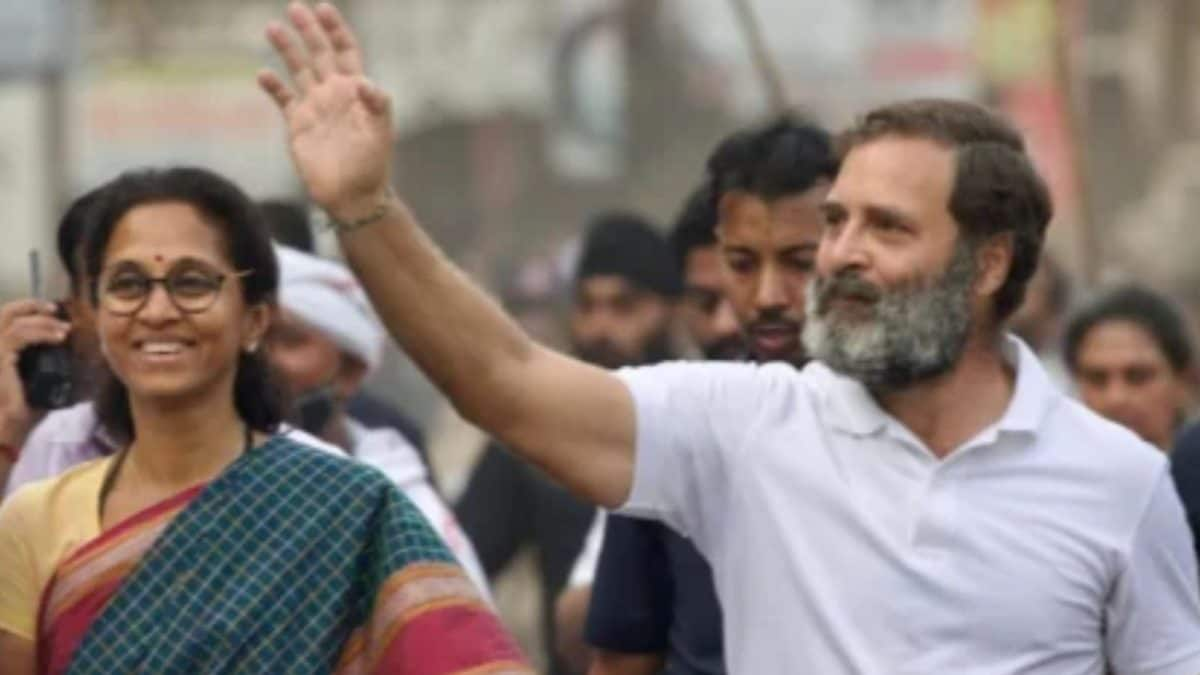
For years, personal warmth between Gandhi and Stalin kept the DMK-Congress partnership anchored as one of the Opposition’s most dependable pillars. File pic/PTI
Rahul Gandhi’s push to secure an active governance role and ministerial berths for the Congress in Tamil Nadu—culminating in its May 2026 alliance with actor-politician C Joseph Vijay’s Tamilaga Vettri Kazhagam (TVK) to join a coalition government in Chennai—has come at a steep national price. On Saturday, Dravida Munnetra Kazhagam (DMK) president MK Stalin formally endorsed the Union government’s revised Constitution (132nd Amendment) Bill and the Delimitation (Second) Bill, 2026, handing the National Democratic Alliance (NDA) crucial parliamentary momentum ahead of next week’s special sitting while leaving the Congress isolated on its core constitutional campaign.
For years, personal warmth between Gandhi and Stalin kept the DMK-Congress partnership anchored as one of the Opposition’s most dependable pillars. Yet in chasing local power-sharing and executive participation in Tamil Nadu after a fractured assembly verdict, the Congress effectively severed ties with the INDIA bloc’s largest southern force—forfeiting any leverage to stop Stalin from cutting his own constitutional deal with New Delhi.
Inside the DMK-Congress Rupture
The breakdown in trust between the Congress and the DMK leadership did not happen overnight. Throughout the run-up to and aftermath of the 2026 Tamil Nadu Assembly elections, segments of the Congress pushed hard for grassroots expansion, a larger seat footprint, and formal participation in state governance—demands long resisted by Dravidian majors accustomed to single-party rule.
When the Congress ultimately broke away from the DMK and joined hands with the Vijay-led TVK to enter the new Chennai ministry in May, the rupture was complete, with DMK MPs even seeking separate seating away from Congress benches in the Lok Sabha.
Now sitting in the opposition in Tamil Nadu and freed from coalition obligations to the Congress, Stalin had zero political incentive to consult Gandhi before weighing the Centre’s revamped delimitation package. Once the Union government rewrote its earlier April proposal to guarantee a uniform 50 per cent seat expansion across all states while freezing inter-state shares based on the 1971 Census until 2051—protecting Tamil Nadu’s 7.18 per cent parliamentary weightage—the DMK swiftly backed the legislation, framing it as a victory for state rights rather than a favour to the Bharatiya Janata Party.
The Limits of Alliance Discipline on Constitutional Reform
At A Glance
Rahul Gandhi secured an alliance with C Joseph Vijay's Tamilaga Vettri Kazhagam in May 2026 to join a coalition government in Chennai.
DMK president MK Stalin formally endorsed the Union government's revised Constitution 132nd Amendment Bill and the Delimitation Second Bill.
The revised delimitation package freezes inter-state shares based on the 1971 Census until 2051, protecting Tamil Nadu's 7.18 per cent parliamentary weightage.
The Congress party broke away from its alliance with the DMK following disagreements over state governance participation and seat footprints.
The fallout underscores a recurring structural vulnerability in the Congress’s dealings with regional satraps. Whether navigating seat-sharing friction with the Samajwadi Party in Uttar Pradesh, Trinamool Congress in West Bengal, or Sharad Pawar’s Nationalist Congress Party (SP)—which has also signalled a shift on the revised delimitation bill—the national party has repeatedly struggled to balance state-level organisational ambitions against national floor coordination.
Constitutional amendments, which require a two-thirds majority in both Houses of Parliament, expose those fault lines starkly. While Rahul Gandhi warned on Saturday that the 132nd Amendment grants the executive and the Election Commission a “blank cheque" to redraw boundaries, regional parties increasingly evaluate high-stakes constitutional bills through a pragmatic prism of state-specific arithmetic rather than ideological loyalty to a fractured Opposition bloc. In trading a tested 22-MP parliamentary ally for a junior foothold in Chennai’s cabinet, the Congress discovered just how quickly local gambits can unravel national strategy.
Handpicked stories, in your inbox
A newsletter with the best of our journalism
About the Author

Pathikrit Sen Gupta is a Senior Associate Editor with News18.com and likes to cut a long story short. He writes sporadically on Politics, Sports, Global Affairs, Space, Entertainment, And Food. He tra...Read More
First Published:
November 28, 2026, 22:38 IST
Disclaimer: Comments reflect users’ views, not News18’s. Please keep discussions respectful and constructive. Abusive, defamatory, or illegal comments will be removed. News18 may disable any comment at its discretion. By posting, you agree to our Terms of Use and Privacy Policy.
Read More





 English (US) ·